

The Challenge
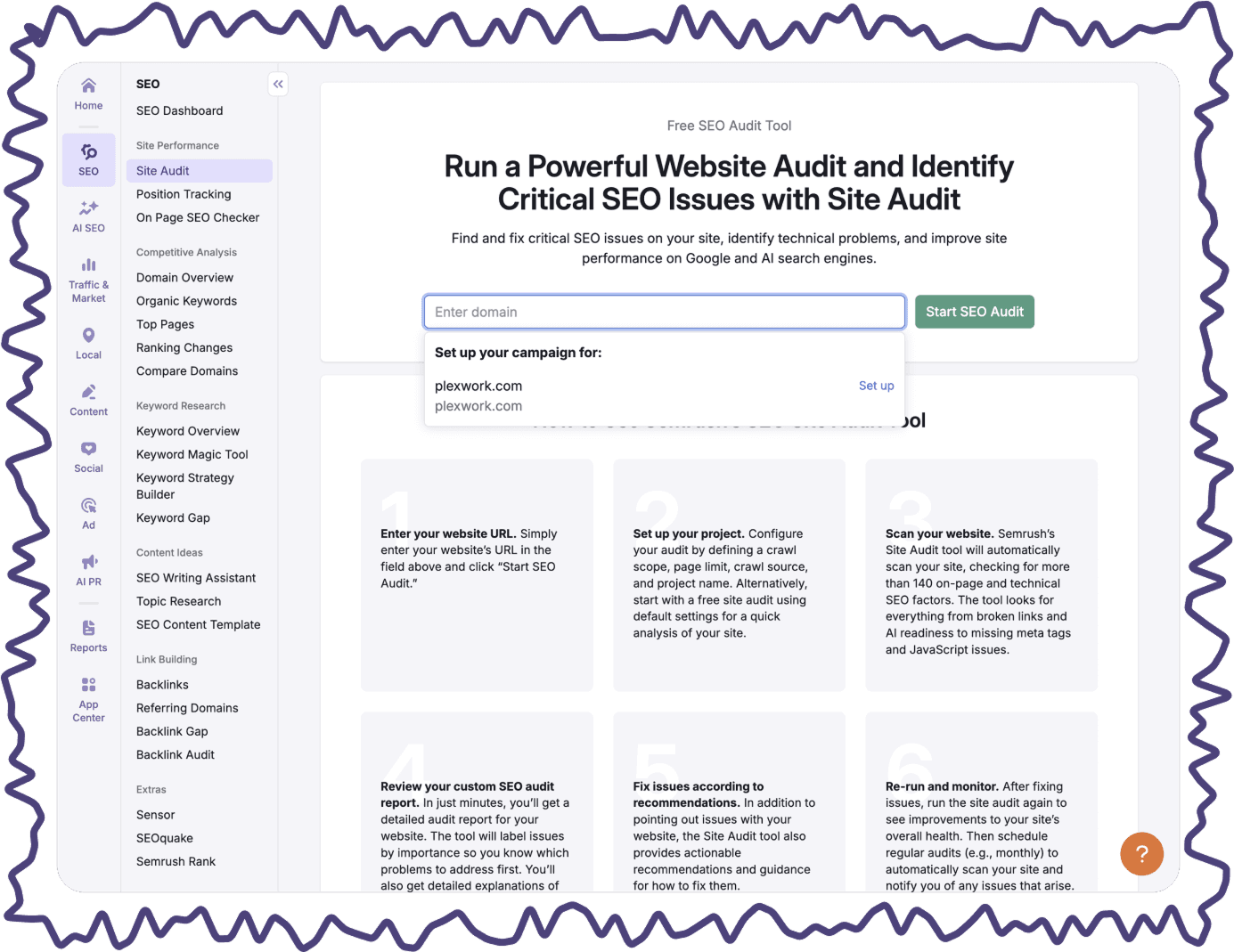
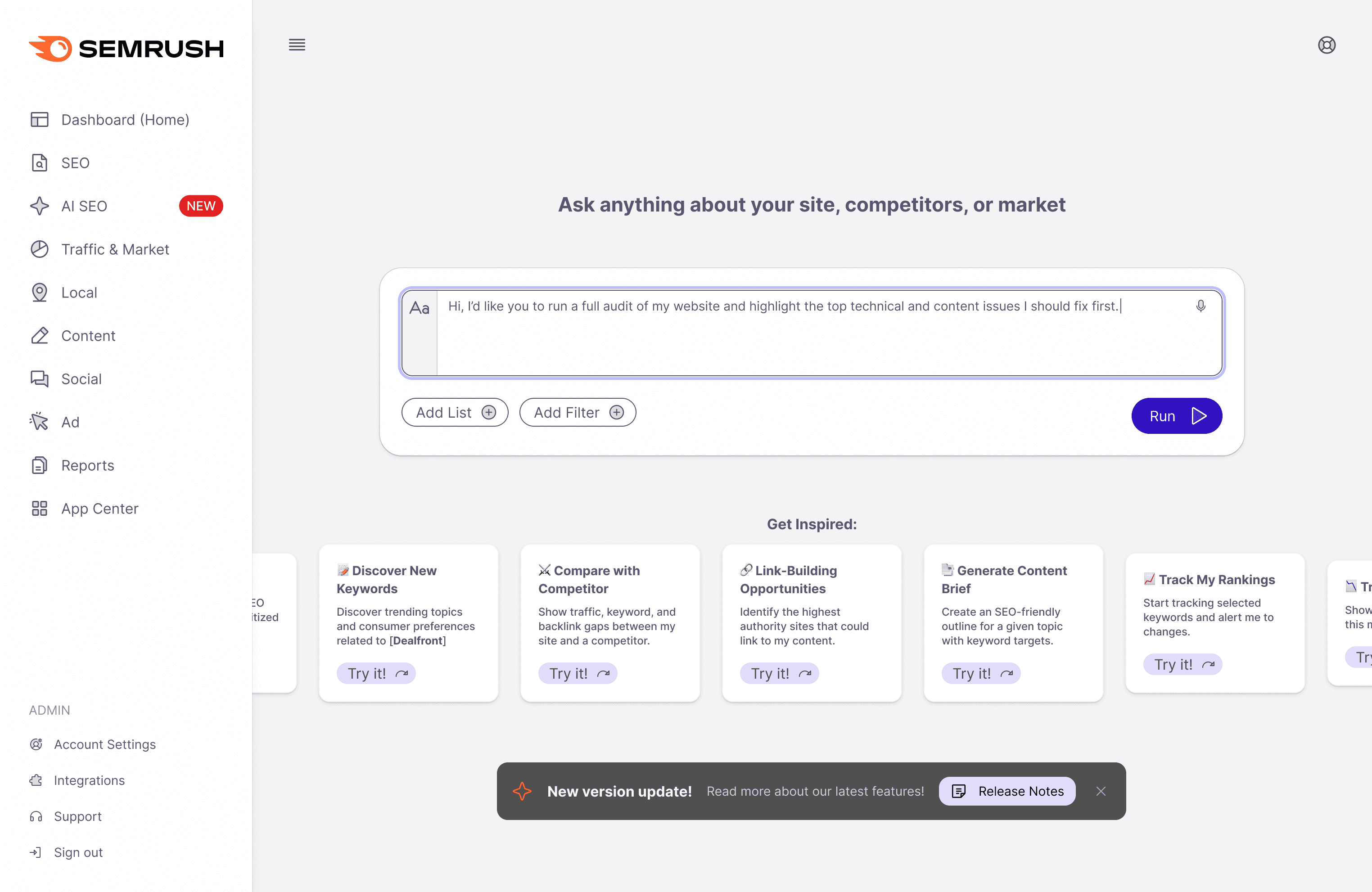
We were asked by Semrush to explore how AI could be integrated into their core offering. Semrush already had a strong, world class I would say, SEO platform, but they needed to push into AI-driven insights to stay ahead.
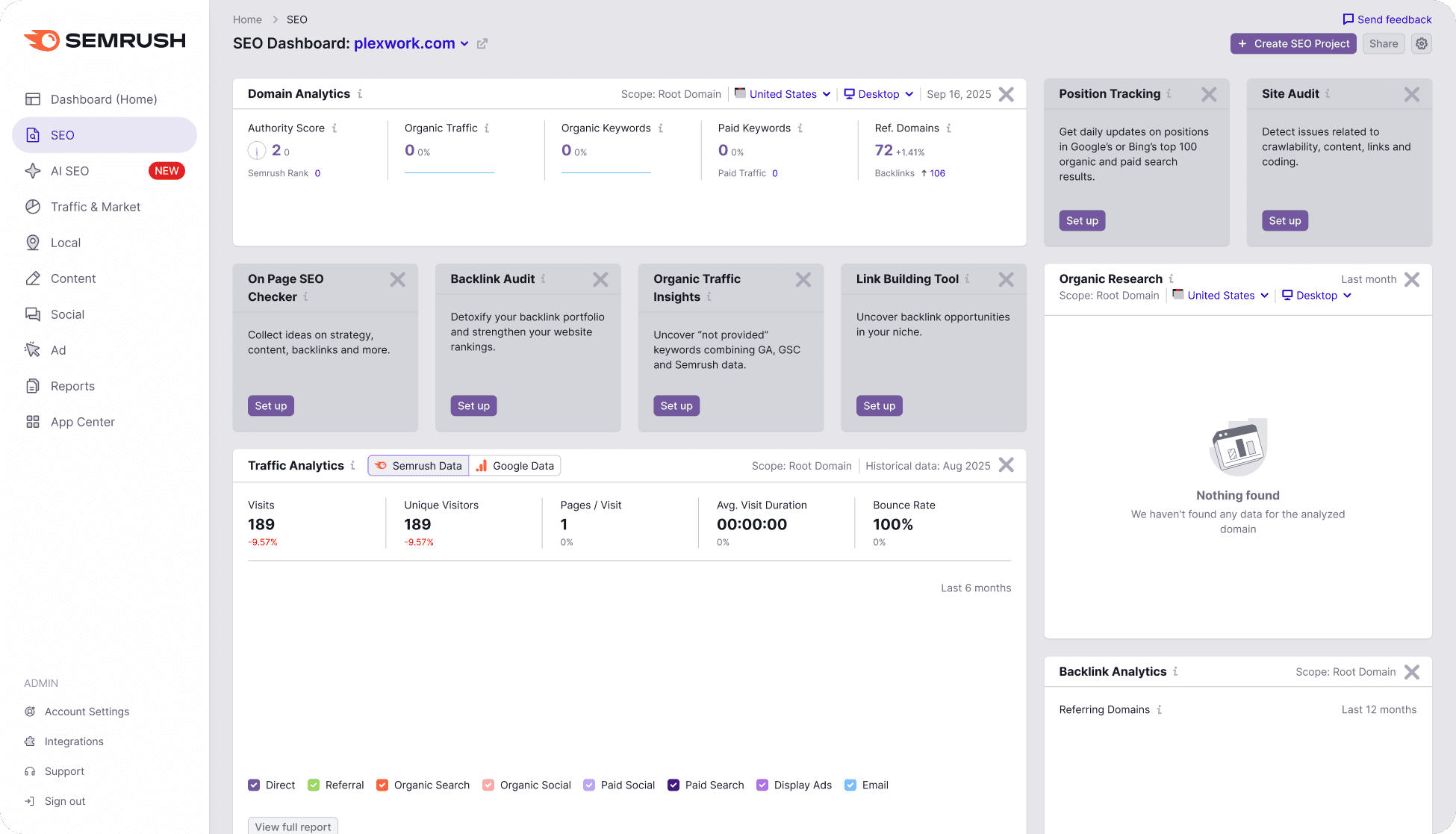
So here's what i had to work with:
Our Approach
When we looked at legacy design systems, the problems were always the same. Too many inconsistencies, too many duplicate components, and no one really owning the thing. Designers worked one way, developers another, and adoption was slow. Documentation was usually an afterthought.
So the goal was simple: fix this mess. We wanted one design language, something everyone could use without thinking twice. It had to scale, not break when teams grew, and it had to work with automation and AI agents.
For us, success meant clarity. A system that onboarded people fast, cut design-debt, and actually made teams move quicker instead of holding them back.
The Vision
The results
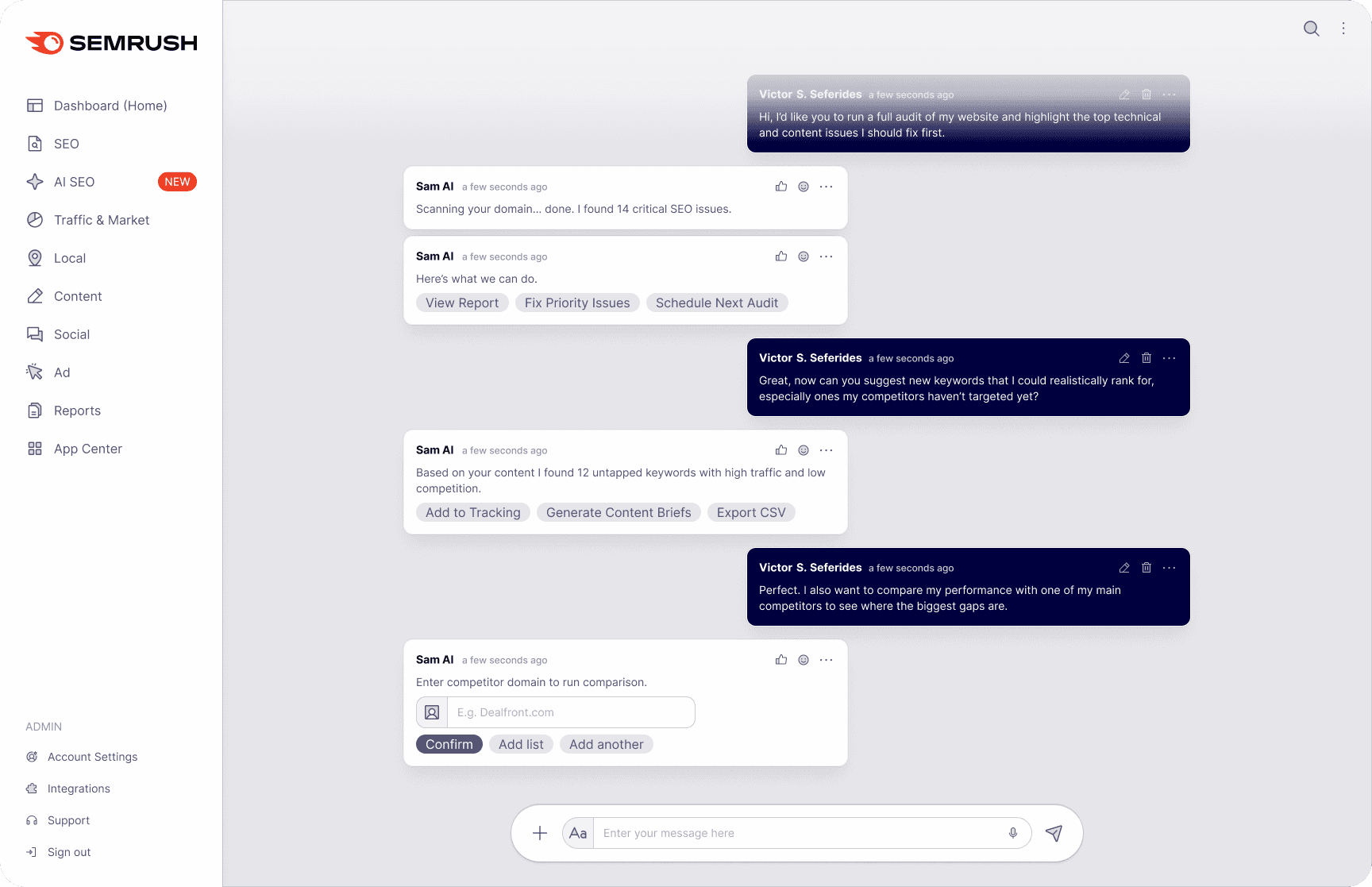
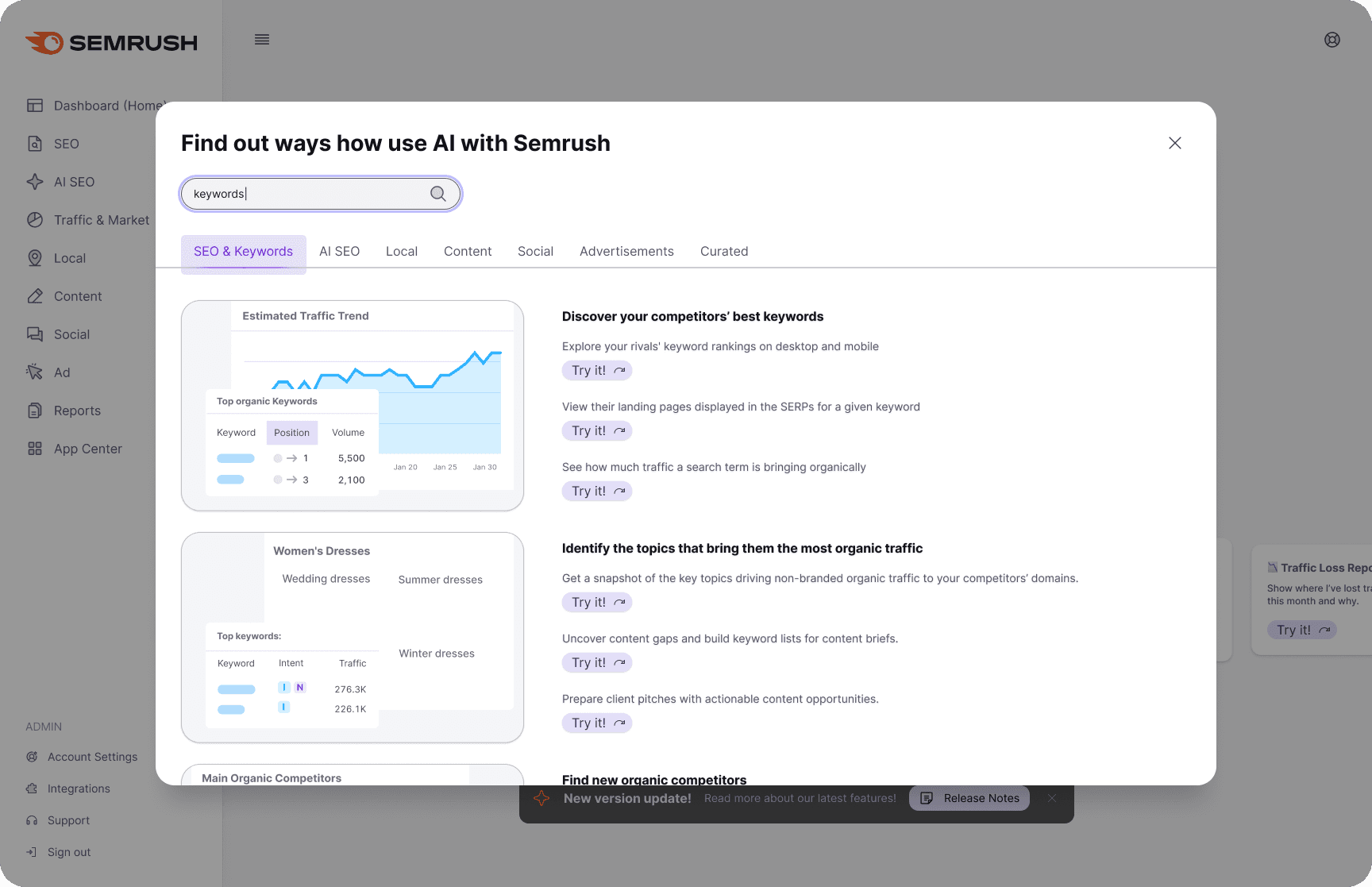
We delivered a fully unified, agentic design system that teams actually adopted. Designers and developers were moving faster, onboarding was easier, and the system scaled across multiple products. It reduced friction, cut repeated work, and became the backbone for faster innovation.
Learnings
We learned that starting small, shipping fast, and iterating constantly beats waiting for perfection.
Involving both designers and developers early is critical, because tools alone don’t guarantee adoption.
Consistency is king, but teams need flexibility to adapt without breaking the rules.
Finally, automation and AI only deliver value if the underlying structure is solid otherwise they just add noise.